
How Mylar Bags Are Being Rethought in the Era of Plastic Regulation
Discover how Mylar bags evolve with sustainable materials and eco-friendly innovations to meet modern plastic regulations globally.

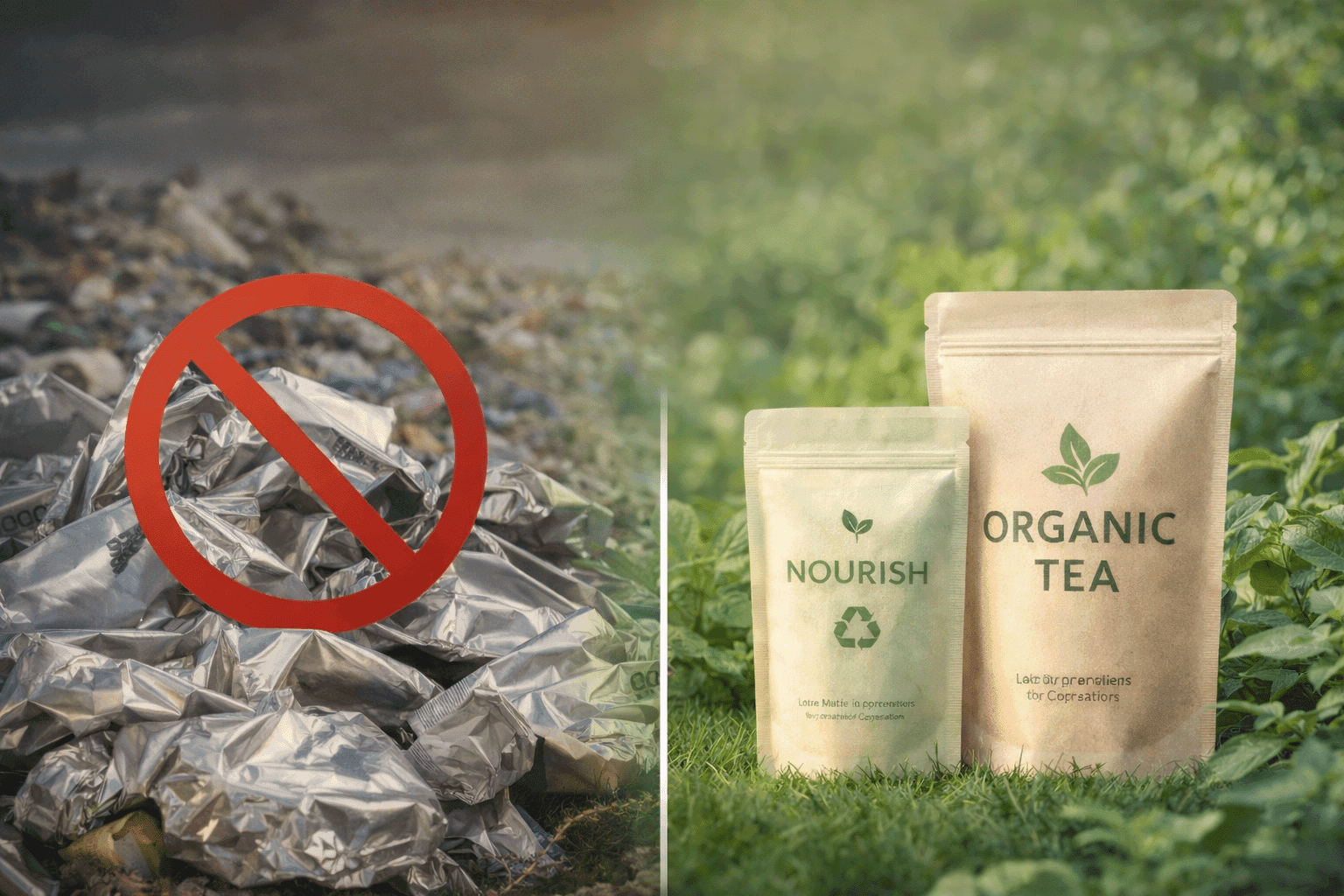
Mylar bags have been the workhorses of packaging forever. Coffee stays fresh. Supplements don't degrade. Snacks actually taste like something when you open the bag. They work. End of story.
Except it's not the end. Because regulations are crashing the party.
Seven states now have extended producer responsibility (EPR) laws for packaging according to the National Caucus of Environmental Legislators. And California? They went all in. The Public Policy Institute of California calls its law "the most aggressive EPR law in the world for packaging."
So, what happens when your favorite packaging format runs straight into a brick wall of regulations? Let's dig in.
The Regulatory Reality Check
Let’s take a look at some numbers. The Flexible Packaging Association’s 2024 report says the US flexible packaging market hit $51.1 billion in 2024. Business is good.
Oregon started collecting fees in July 2025 under its Plastic Pollution and Recycling Modernization Act. Payments go to the Circular Action Alliance based on packaging weight and material type. Hard-to-recycle flexible packaging? Higher fees.
Colorado's Producer Responsibility Program follows January 2026; same structure, same cost pressure on multi-layer Mylar bags.
And how can I not mention California’s Senate Bill 54? You should definitely know about this. CalRecycle breaks it down on their website plainly. Packaging makes up over 50% of what is disposed of in California landfills by volume. Read that again. Half.
California plans to change this by 2032; every single piece of single-use packaging sold in California must be recyclable or compostable. Plastic packaging gets cut by 25%, and they want a 65% recycling rate for plastic packaging. If your brand sells in California (or might someday), this will keep you up at night.
Here’s why. CalRecycle’s implementation materials make it clear that this applies to every box, every bag, and every wrapper. That includes customizable Mylar bags. Mess it up, and California Resources Code hits you with penalties up to $50,000 per day. Per violation.
Mylar bags have a problem, though; most are multi-layered: polyester, aluminum, and polyethylene. They’re great for a protective barrier, but terrible when it comes to recycling. Packaging Insights reports that less than 1% of nearly 4.8 million tons of film and flexible packaging in the US actually gets recycled.
The Mono-Material Pivot
To tackle the situation, the industry is making a shift to mono-materials. Europe’s CEFLEX set the guidelines, and California is making them real.
Under SB 54, recyclability gets determined by CalRecycle’s Covered Material Categories process. Access to collection programs, sortability, and end markets that actually exist. That’s the test.
Manufacturers are stepping up with new high-performance polyethylene and polypropylene structures hitting the market. They have the barrier protection properties for metalized films, but work with existing recycling streams, and here’s the kicker: CalRecycle’s regulations include eco-modulation. Use recyclable mono-materials? Your fees go down. Stick with hard-to-recycle multi-layer stuff? You pay more.
Custom Mylar bags look different today than they did five years ago:
-
Mono-material structures with custom barrier coatings for your specific product
-
PCR content blended right into the film layers
-
Recyclable valves for coffee and dehydrated foods
-
Water-based inks and adhesives that don't wreck recycling streams
Coffee roasters can now order customizable Mylar bags with degassing valves made from the same material family as the pouch. The whole thing goes into recycling. No tearing parts apart.
The Deadlines You Can't Miss
May 31, 2026, is the date to circle. rePurpose Global lays it out; producers must submit 2025 packaging data by then. Plus, an Annual Source Reduction Report. August 2026? Fees start hitting based on that data.
Those source reduction plans aren't optional. CalRecycle's reporting requirements spell it out. You need concrete pathways. Less packaging weight. Ditch problematic materials. Switch to recyclable formats. Maybe even reuse models.
Here's something John Hite from The Recycling Partnership pointed out at PACK EXPO East. Under California's rules, only 8% of that source reduction target can come from recycled content alone.
The rest must come from actual reduction:
Right-sizing. Refill systems. Material substitution.
Other states are watching. What California does today, others adopt tomorrow.
Customization Actually Gets Better
Here’s the counterintuitive thing about regulation. It drives innovation.
Custom Mylar bags today come with features specifically for this new world:
-
Mono-material PE structures with high-barrier coatings that keep products fresh and fees low
-
PCR-integrated films that cut virgin plastic use by 30-50%
-
Source-reduction optimized designs that use less material overall
-
Digital printing for smaller runs and less waste
Who’s responsible for all this? State laws define “producer” broadly. You’re the producer if your brand’s name is on the packaging. You’ve gotta join approved PROs in each state where you sell your product. Right now, that’s CAA (Circular Action Alliance) for most, and you report annually.
So yeah, flexible packaging users have work to do. The upside is that your fees go down across every state if you redesign custom Mylar bags for recyclability and source reduction. Oh, and you also start to look like a sustainability leader.
What "Recyclable" Actually Means Now
State guidelines are getting specific. For a package to be considered recyclable:
-
Collection programs must actually take it
-
Sorting facilities must actually process it
-
End markets must actually exist for the material
For custom Mylar bags, this changes everything.
The first step is material selection. Mono-material PE structures work. Multi-material laminates? They can’t be sorted or processed through conventional infrastructure. States know this. Their fee structures reflect this.
Inks and coatings used matter as well. Dark colors and heavy coverage can contaminate recycled plastic melt. Abandoning paint isn’t the solution; it’s smarter print. Sparse coverage, unprinted windows, and strategic use of substrate colors are the way.
Closures and additives aren't an afterthought anymore. The Film & Flexibles Recycling Coalition's CalFFlex Initiative is actively working on responsible end markets for these materials.
Source Reduction Gets Real
Source reduction is just as important as recyclability under these new laws. States aren’t just asking for better materials; they’re requiring less packaging overall.
That’s pushing more businesses toward reuse models, especially bulk refill systems. A customer buys a durable container once and refills it using Mylar bags. The pouch itself is still single-use, but it replaces rigid packaging that would otherwise be thrown out after one round.
Some specialty food companies are also experimenting with take-back programs. TerraCycle offers mail-in recycling as one option—availability and pricing vary, but it’s worth considering for certain use cases.
The bottom line: Custom Mylar bags now need to be designed with their end-of-life in mind from the very beginning. A pouch meant for a take-back stream, for example, requires different adhesives than one destined for curbside recycling.
The Brand Owner's Reality Check
Realistically speaking, switching materials costs money. Testing takes time. Machinery might need adjustment. All while regulations vary by state and deadlines loom.
Some brands over-claim recyclability, which can be a risky move and might end up causing them penalties as state labeling guidelines are strict. The law says you can only label something recyclable if it gets collected, sorted, and processed where your customers live.
The smart play would be to truly invest in recyclable flexible packaging. Communicate honestly about it. Build trust with customers and regulators. State programs are multiplying, and more will follow.
What You Actually Do Now
Review your data systems. States require detailed reporting. Weight. Material category. Resin type. Component count. If you can't report this accurately now, build that capability before 2026 deadlines hit.
Talk to your converter. Most major flexible packaging suppliers have mono-material or high-PCR options now. Get samples. Run tests. Know what changes and what stays the same.
Model your fee exposure. State eco-modulation systems mean your packaging design choices directly affect costs. Calculate different scenarios. The difference between multi-layer and mono-material custom Mylar bags adds up fast.
Align internal teams. Packaging engineering. Sustainability. Finance. Procurement. Legal. Get everyone talking now. Compliance touches everything.
Watch the landscape. Seven states have packaging EPR laws already. More is coming, according to the National Caucus of Environmental Legislators. Industry groups track this stuff.
The Bottom Line
To sum things up, Mylar bags aren’t disappearing. They work too well and offer excellent protection for your product while also being lightweight for shipping, but they’re changing. Fundamentally.
The shift from multi-material to mono-material is the biggest change in flexible packaging since metallized films arrived decades ago. Customizable Mylar bags now balance barrier protection with end-of-life considerations. Custom Mylar bags can include recycled content, renewable materials, and recyclable structures. Whatever your brand requires.
Oregon's already charging fees on hard-to-recycle materials. Colorado starts in January 2026. California's May 31, 2026, reporting deadline is right around the corner. Maine and Minnesota aren't far behind.
The brands that figure this out will be the ones that lean in. They'll work with converters who understand both material science and regulatory nuance. They'll test, learn, and adapt as technology and policy evolve.
Regulation isn't the enemy here. It's pushing the industry toward better solutions. For Mylar bags, that means formats that perform on the shelf, in the supply chain, and after the customer's done with them. That's not just compliance. That's good design.
Need custom Mylar bags that actually meet state regulations? Talk to our packaging specialists at The Perfect Packaging about mono-material options, recycled content solutions, and design strategies that work across all 50 states.
Related Articles


